Buy e-tournaments.eu ?
We are moving the project
e-tournaments.eu .
Are you interested in purchasing the domain
e-tournaments.eu ?
domain@kv-gmbh.de · 0541-91531010
Buy e-tournaments.eu ?
When are ligands neutrally charged?
Ligands are neutrally charged when they have an equal number of positive and negative charges. This can occur when the ligand has a net charge of zero, such as in the case of water (H2O) or ammonia (NH3). Additionally, ligands can also be neutrally charged when they form coordinate covalent bonds with a metal ion, resulting in a neutral overall charge for the complex. **
What is the toughness of ligands?
The toughness of ligands refers to their ability to form stable coordination complexes with metal ions. Ligands with high toughness have strong bonds with the metal ion, making them less likely to dissociate from the complex. This property is important in determining the stability and reactivity of coordination complexes. Tough ligands are often used in catalysis and other applications where the complex needs to remain intact under harsh conditions. **
Similar search terms for Ligands
Top-Angebote
Products related to Ligands:
-
X Rocker Agility Esports Gaming Chair Blue 131cm H X 66cm W X 53.5cm DThis is a supremely stylish racing-inspired gaming chair. Featuring a soft and durable faux leather material, a striking coloration, a height-adjustable base, a tiltable backrest, and lumbar, and neck cushions for superior comfort over those long gameplay sessions. X Rocker Frame Colour: Blue179,99 £*Shipping: 0,00 £Secure redirect to the provider
-
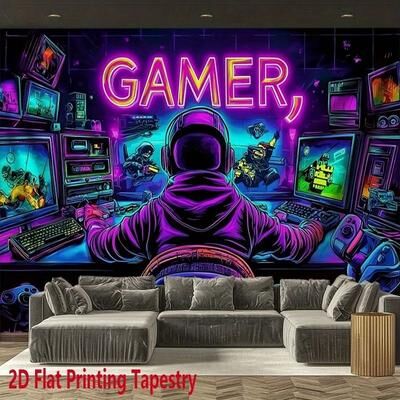
Uplift Picks Fluorescent Gamer Tapestry Gaming Room Decor Esports Wall Hanging 150x200 CmLevel up your space with this bold and vibrant gamer tapestry designed to bring energy and personality into any room. Perfect for gamers and streamers, it features a striking fluorescent wall tapestry design that stands out day or night. Whether you...117,98 $*Shipping: 0,00 $Secure redirect to the provider
-
Uplift Picks Fluorescent Gamer Tapestry Gaming Room Decor Esports Wall Hanging 130x150 CmLevel up your space with this bold and vibrant gamer tapestry designed to bring energy and personality into any room. Perfect for gamers and streamers, it features a striking fluorescent wall tapestry design that stands out day or night. Whether you...117,98 $*Shipping: 0,00 $Secure redirect to the provider
-
Uplift Picks Fluorescent Gamer Tapestry Gaming Room Decor Esports Wall Hanging 40x60 CmLevel up your space with this bold and vibrant gamer tapestry designed to bring energy and personality into any room. Perfect for gamers and streamers, it features a striking fluorescent wall tapestry design that stands out day or night. Whether you...67,98 $*Shipping: 0,00 $Secure redirect to the provider


-
What is the structural formula of ligands?
The structural formula of ligands can vary depending on the specific ligand, but in general, ligands are molecules or ions that have one or more lone pairs of electrons that can be donated to a metal ion. The structural formula typically includes the arrangement of atoms and lone pairs of electrons that are available for coordination to the metal ion. Ligands can be classified as monodentate, bidentate, tridentate, etc., depending on the number of donor atoms they have available for coordination. Overall, the structural formula of ligands reflects their ability to form coordination complexes with metal ions. **
-
What is the chelating ability of ligands?
The chelating ability of ligands refers to their ability to form coordination complexes by binding to a central metal ion through multiple donor atoms. Ligands with chelating ability can form more stable complexes compared to monodentate ligands because they can wrap around the metal ion, forming a ring-like structure known as a chelate. This chelate structure enhances the stability of the complex by reducing the chances of other molecules displacing the ligand from the metal ion. Chelating ligands are commonly used in various fields such as medicine, environmental science, and industrial chemistry due to their ability to form stable and selective complexes with metal ions. **
-
How can one determine the toughness of ligands?
The toughness of ligands can be determined by their ability to form stable complexes with metal ions. Ligands with multiple donor atoms and strong donor atoms, such as nitrogen, oxygen, and sulfur, are generally tougher than ligands with fewer or weaker donor atoms. Additionally, the size and charge of the ligand can also affect its toughness, with larger and negatively charged ligands typically being tougher. Experimentally, the toughness of ligands can be determined by measuring the stability constants of the metal-ligand complexes they form. **
-
What is the number of ligands in complex chemistry?
The number of ligands in complex chemistry refers to the number of molecules or ions that are bonded to a central metal atom. The number of ligands can vary depending on the coordination number of the metal atom, which is the total number of bonds formed with the ligands. Common coordination numbers include 2, 4, 6, and so on, which correspond to the number of ligands bonded to the central metal atom. The coordination number and the number of ligands play a crucial role in determining the geometry and properties of coordination complexes. **

What is the number of ligands in coordination chemistry?
The number of ligands in coordination chemistry refers to the number of donor atoms in a molecule or ion that can bond to a central metal atom. The number of ligands can vary depending on the coordination number of the central metal atom. Common coordination numbers include 2, 4, 6, and 8, which correspond to complexes with 2, 4, 6, or 8 ligands, respectively. The coordination number and the number of ligands determine the geometry and overall structure of the coordination complex. **
Which factors influence the exchange rate of ligands in the complex?
The exchange rate of ligands in a complex is influenced by several factors. One key factor is the strength of the bond between the ligand and the central metal ion. Stronger bonds typically result in slower exchange rates. Additionally, the steric hindrance around the metal center can affect the exchange rate, with bulky ligands hindering the exchange process. The nature of the solvent and the temperature of the system can also impact the exchange rate of ligands in a complex. **
Top-Angebote
Products related to Ligands:
-
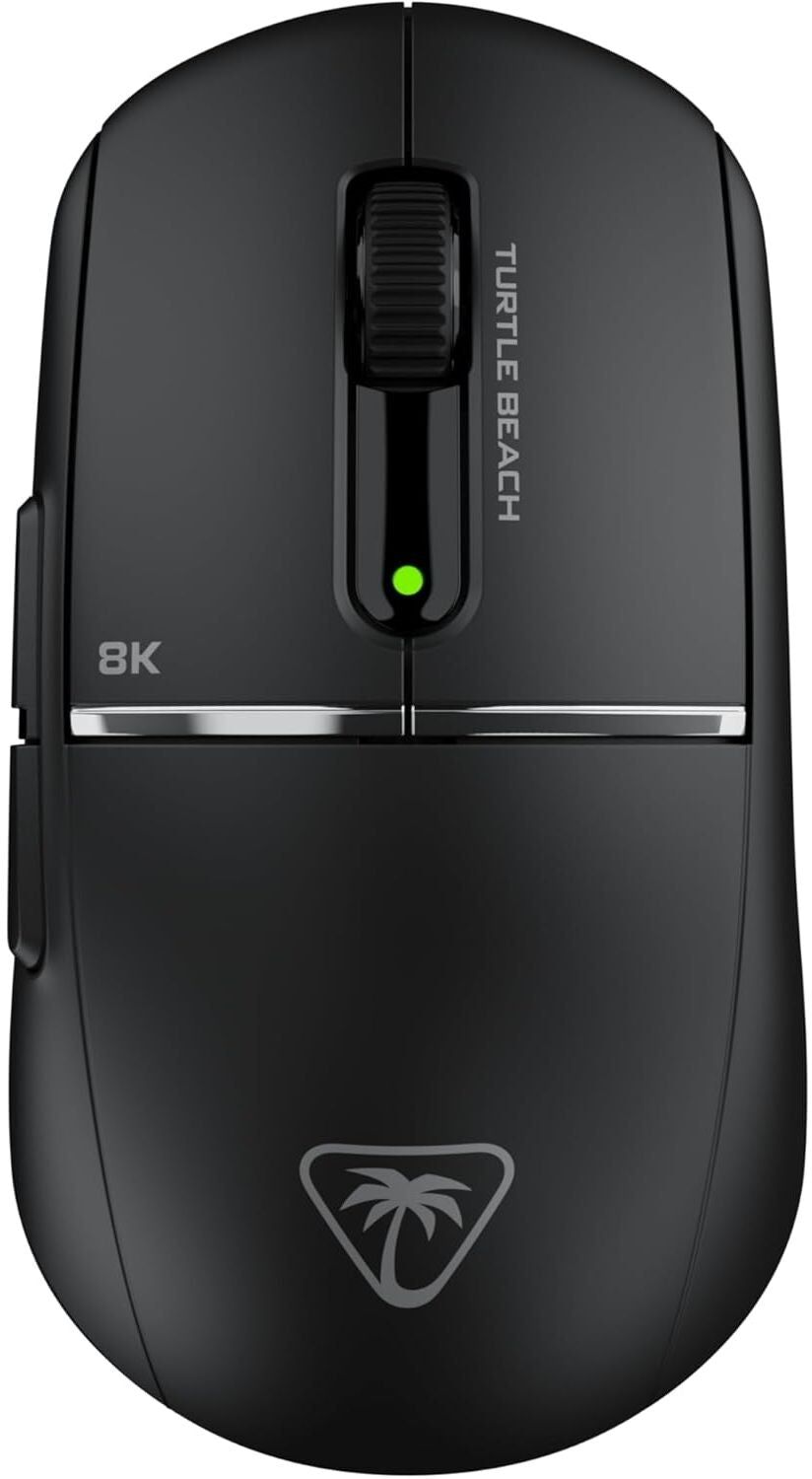
Turtle Beach Burst II Pro Black Wireless Esports Gaming MouseOverview The Turtle Beach Burst II Pro Wireless is a high-performance esports gaming mouse engineered for speed, accuracy, and competitive gameplay. Featuring an ultra-lightweight design, a high-precision 30K DPI optical sensor, and an ultra-fast 8K polling rate, this mouse is built to deliver lightning-fast response times and reliable wireless performance. Designed for serious PC gamers, it combines precision engineering with long battery life to support extended gaming sessions. Key Features • Ultra-lightweight design at approximately 57g for fast movements • Owl-Eye optical sensor with up to 30,000 DPI precision • True 8,000Hz wireless polling rate for ultra-low latency • Titan optical switches rated for up to 100 million clicks • Up to 150-hour battery life depending on polling settings • Dual wireless connectivity including 2.4GHz and Bluetooth • Symmetrical shape suitable for multiple grip styles • Up to 8 programmable buttons for custom controls • Smooth tracking on multiple surfaces including glass • Software customisation for DPI and performance tuning Benefits The Burst II Pro is ideal for competitive gamers who require fast reaction times and precision tracking. Its lightweight build helps reduce fatigue during long gaming sessions, while the 8K polling rate ensures extremely responsive input for FPS and esports titles. With flexible connectivity and long battery life, it is also suitable for users wanting a reliable wireless gaming setup without constant charging. Specifications Specification Details Brand Turtle Beach Model Burst II Pro Colour Black Sensor Owl-Eye Optical Sensor DPI Up to 30,000 DPI Polling Rate Up to 8000Hz Connectivity 2.4GHz Wireless, Bluetooth, USB Buttons Up to 8 Programmable Switch Type Titan Optical Switches Weight Approx. 57g Battery Life Up to 150 Hours Design Symmetrical Usage Esports / Gaming79,98 £*Shipping: 0,00 £Secure redirect to the provider
-
Uplift Picks Fluorescent Gamer Tapestry Gaming Room Decor Esports Wall Hanging 73x95 CmLevel up your space with this bold and vibrant gamer tapestry designed to bring energy and personality into any room. Perfect for gamers and streamers, it features a striking fluorescent wall tapestry design that stands out day or night. Whether you...67,98 $*Shipping: 0,00 $Secure redirect to the provider
-
X Rocker Agility Esports Gaming Chair Blue 131cm H X 66cm W X 53.5cm DThis is a supremely stylish racing-inspired gaming chair. Featuring a soft and durable faux leather material, a striking coloration, a height-adjustable base, a tiltable backrest, and lumbar, and neck cushions for superior comfort over those long gameplay sessions. X Rocker Frame Colour: Blue179,99 £*Shipping: 0,00 £Secure redirect to the provider
-
Uplift Picks Fluorescent Gamer Tapestry Gaming Room Decor Esports Wall Hanging 150x200 CmLevel up your space with this bold and vibrant gamer tapestry designed to bring energy and personality into any room. Perfect for gamers and streamers, it features a striking fluorescent wall tapestry design that stands out day or night. Whether you...117,98 $*Shipping: 0,00 $Secure redirect to the provider
-
When are ligands neutrally charged?
Ligands are neutrally charged when they have an equal number of positive and negative charges. This can occur when the ligand has a net charge of zero, such as in the case of water (H2O) or ammonia (NH3). Additionally, ligands can also be neutrally charged when they form coordinate covalent bonds with a metal ion, resulting in a neutral overall charge for the complex. **
-
What is the toughness of ligands?
The toughness of ligands refers to their ability to form stable coordination complexes with metal ions. Ligands with high toughness have strong bonds with the metal ion, making them less likely to dissociate from the complex. This property is important in determining the stability and reactivity of coordination complexes. Tough ligands are often used in catalysis and other applications where the complex needs to remain intact under harsh conditions. **
-
What is the structural formula of ligands?
The structural formula of ligands can vary depending on the specific ligand, but in general, ligands are molecules or ions that have one or more lone pairs of electrons that can be donated to a metal ion. The structural formula typically includes the arrangement of atoms and lone pairs of electrons that are available for coordination to the metal ion. Ligands can be classified as monodentate, bidentate, tridentate, etc., depending on the number of donor atoms they have available for coordination. Overall, the structural formula of ligands reflects their ability to form coordination complexes with metal ions. **
-
What is the chelating ability of ligands?
The chelating ability of ligands refers to their ability to form coordination complexes by binding to a central metal ion through multiple donor atoms. Ligands with chelating ability can form more stable complexes compared to monodentate ligands because they can wrap around the metal ion, forming a ring-like structure known as a chelate. This chelate structure enhances the stability of the complex by reducing the chances of other molecules displacing the ligand from the metal ion. Chelating ligands are commonly used in various fields such as medicine, environmental science, and industrial chemistry due to their ability to form stable and selective complexes with metal ions. **
Similar search terms for Ligands
-
Uplift Picks Fluorescent Gamer Tapestry Gaming Room Decor Esports Wall Hanging 130x150 CmLevel up your space with this bold and vibrant gamer tapestry designed to bring energy and personality into any room. Perfect for gamers and streamers, it features a striking fluorescent wall tapestry design that stands out day or night. Whether you...117,98 $*Shipping: 0,00 $Secure redirect to the provider
-
Uplift Picks Fluorescent Gamer Tapestry Gaming Room Decor Esports Wall Hanging 40x60 CmLevel up your space with this bold and vibrant gamer tapestry designed to bring energy and personality into any room. Perfect for gamers and streamers, it features a striking fluorescent wall tapestry design that stands out day or night. Whether you...67,98 $*Shipping: 0,00 $Secure redirect to the provider
-
Uplift Picks Fluorescent Gamer Tapestry Gaming Room Decor Esports Wall Hanging 120x180 CmLevel up your space with this bold and vibrant gamer tapestry designed to bring energy and personality into any room. Perfect for gamers and streamers, it features a striking fluorescent wall tapestry design that stands out day or night. Whether you...117,98 $*Shipping: 0,00 $Secure redirect to the provider
-
Uplift Picks Fluorescent Gamer Tapestry Gaming Room Decor Esports Wall Hanging 180x235 CmLevel up your space with this bold and vibrant gamer tapestry designed to bring energy and personality into any room. Perfect for gamers and streamers, it features a striking fluorescent wall tapestry design that stands out day or night. Whether you...120,48 $*Shipping: 0,00 $Secure redirect to the provider
-
How can one determine the toughness of ligands?
The toughness of ligands can be determined by their ability to form stable complexes with metal ions. Ligands with multiple donor atoms and strong donor atoms, such as nitrogen, oxygen, and sulfur, are generally tougher than ligands with fewer or weaker donor atoms. Additionally, the size and charge of the ligand can also affect its toughness, with larger and negatively charged ligands typically being tougher. Experimentally, the toughness of ligands can be determined by measuring the stability constants of the metal-ligand complexes they form. **
-
What is the number of ligands in complex chemistry?
The number of ligands in complex chemistry refers to the number of molecules or ions that are bonded to a central metal atom. The number of ligands can vary depending on the coordination number of the metal atom, which is the total number of bonds formed with the ligands. Common coordination numbers include 2, 4, 6, and so on, which correspond to the number of ligands bonded to the central metal atom. The coordination number and the number of ligands play a crucial role in determining the geometry and properties of coordination complexes. **
-
What is the number of ligands in coordination chemistry?
The number of ligands in coordination chemistry refers to the number of donor atoms in a molecule or ion that can bond to a central metal atom. The number of ligands can vary depending on the coordination number of the central metal atom. Common coordination numbers include 2, 4, 6, and 8, which correspond to complexes with 2, 4, 6, or 8 ligands, respectively. The coordination number and the number of ligands determine the geometry and overall structure of the coordination complex. **
-
Which factors influence the exchange rate of ligands in the complex?
The exchange rate of ligands in a complex is influenced by several factors. One key factor is the strength of the bond between the ligand and the central metal ion. Stronger bonds typically result in slower exchange rates. Additionally, the steric hindrance around the metal center can affect the exchange rate, with bulky ligands hindering the exchange process. The nature of the solvent and the temperature of the system can also impact the exchange rate of ligands in a complex. **
* All prices are inclusive of VAT and, if applicable, plus shipping costs. The offer information is based on the details provided by the respective shop and is updated through automated processes. Real-time updates do not occur, so deviations can occur in individual cases. ** Note: Parts of this content were created by AI.